B.Tech – Bachelor of Technology
Course Overview
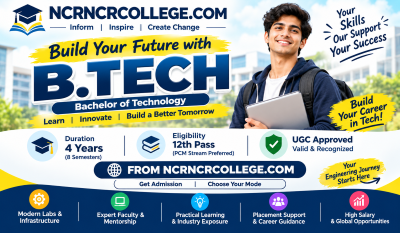
B.Tech (Bachelor of Technology) is a 4-year undergraduate degree in engineering and technology. The course combines classroom learning, practical training, laboratory work, projects and industry-related skills.
Students can select different engineering branches according to their interests, such as Computer Science & Engineering, Information Technology, Mechanical Engineering, Civil Engineering, Electrical Engineering, Electronics & Communication Engineering, Artificial Intelligence and Data Science, etc.
Course Duration
- 4 years
- Usually divided into 8 semesters
- Some universities may offer lateral entry options for eligible diploma holders, where applicable.
Eligibility
Generally, students should:
- Pass Class 12 / 10+2 from a recognised board.
- Have Physics and Mathematics as compulsory subjects.
- The third subject may vary by university, commonly Chemistry / Biotechnology / Biology / a technical vocational subject.
- Minimum marks and subject requirements vary by university and branch.
- For admission through national-level counselling, additional eligibility rules may apply. JoSAA publishes institute-specific eligibility and restrictions.
Approximate Fees
B.Tech fees vary significantly according to the university, branch, category and facilities.
General indicative range:
- Government institutes: approximately ₹1 lakh–₹3 lakh per year
- Private universities: approximately ₹1.5 lakh–₹5 lakh+ per year
- Hostel, examination, development and other charges may be additional.
For example, NIT Delhi's 2026–27 B.Tech first-semester fee varies by income/category; the published day-scholar total ranges from ₹51,700 to ₹1,14,200, depending on the applicable fee category.
At VIT, the 2026–27 B.Tech tuition fee varies by programme group and fee category; the published figures range from approximately ₹1.73 lakh to ₹4.90 lakh per year before considering the applicable scholarship category.
Therefore, students should always check the latest fee structure of the selected university before admission.
Admission Process
The admission process depends on the university and state.
Common routes include:
- Complete Class 12 with the required subjects.
- Appear for the required entrance examination, if applicable.
- Obtain the examination rank/score.
- Register for counselling or university admission.
- Select the preferred branch and college according to eligibility, rank and seat availability.
- Complete document verification.
- Pay the admission fee and confirm the seat.
For IITs, NITs, IIITs and other participating government-funded institutes, JoSAA manages the central seat-allocation process. For 2026, JoSAA covers 23 IITs, 31 NITs, 26 IIITs, IIEST Shibpur and other participating institutes.
Mode of Study
- Regular / classroom-based study
- Practical laboratory sessions
- Projects and assignments
- Industry training/internships, depending on the university
- Some universities may provide additional online learning resources.
Main Subjects / Syllabus
The exact syllabus depends on the chosen engineering branch.
Common first-year subjects may include:
- Engineering Mathematics
- Engineering Physics
- Engineering Chemistry
- Programming Fundamentals
- Basic Electrical Engineering
- Engineering Graphics
- Communication Skills
- Workshop / Practical Training
- Environmental Studies
Branch-specific subjects may include:
Computer Science & Engineering
- Data Structures
- Database Management Systems
- Operating Systems
- Computer Networks
- Software Engineering
- Artificial Intelligence
- Machine Learning
Mechanical Engineering
- Engineering Mechanics
- Thermodynamics
- Manufacturing Processes
- Fluid Mechanics
- Machine Design
- Heat Transfer
Civil Engineering
- Structural Engineering
- Surveying
- Geotechnical Engineering
- Construction Materials
- Transportation Engineering
- Environmental Engineering
Electrical Engineering
- Electrical Machines
- Power Systems
- Control Systems
- Electrical Measurements
- Power Electronics
- Signals and Systems
Electronics & Communication Engineering
- Digital Electronics
- Analog Electronics
- Communication Systems
- Microprocessors
- Embedded Systems
- VLSI
Career Scope
B.Tech graduates can build careers in:
- Information Technology
- Software Development
- Engineering Services
- Manufacturing
- Construction
- Electronics
- Telecommunications
- Automobile Industry
- Power and Energy
- Banking and Financial Technology
- Government and Public Sector
- Research and Development
- Startups and Entrepreneurship
Career opportunities depend on the student's branch, skills, academic performance, internships and experience.
Job Opportunities
After B.Tech, students can apply for positions in:
- IT Companies
- Engineering Companies
- Manufacturing Companies
- Construction Companies
- Automobile Companies
- Electronics Companies
- Telecom Companies
- Government Departments
- Public Sector Organisations
- Research Organisations
- Startups
Common Job Roles
Depending on the specialisation, common roles include:
- Software Developer
- Software Engineer
- Data Analyst
- AI/ML Engineer
- Web Developer
- Network Engineer
- Cyber Security Analyst
- Civil Engineer
- Mechanical Engineer
- Electrical Engineer
- Electronics Engineer
- Design Engineer
- Production Engineer
- Quality Engineer
- Project Engineer
- System Engineer
Expected Salary Range
Salary varies greatly depending on the branch, employer, location, skills and experience.
Indicative starting range in India:
- Around ₹3 lakh–₹8 lakh per year for many entry-level roles
- Candidates with strong technical skills and placements at high-paying companies may receive higher packages.
- Government jobs follow the applicable pay scale.
These are indicative figures, not guaranteed salaries.
Higher Study Options
After completing B.Tech, students can pursue:
- M.Tech
- MBA
- MS
- M.E.
- MCA where eligibility permits
- Ph.D.
- Professional certifications
- Competitive and government examinations
Students may also prepare for GATE, depending on their higher-study or career goals.
Universities Offering B.Tech
Some well-known institutions offering B.Tech / equivalent engineering programmes include:
| University / Institute | Eligibility | Approx. Fee |
|---|---|---|
| IIT Delhi | Class 12 with required subjects + JEE Advanced route | Varies by category; check latest official fee circular |
| NIT Delhi | Class 12 with required subjects + JEE Main/JoSAA route | Approx. ₹0.5–₹1.15 lakh for the published 2026–27 first-semester day-scholar categories |
| Delhi Technological University (DTU) | Class 12 with required subjects + applicable entrance/counselling requirements | Around ₹1.77 lakh tuition fee for 2026–27, with additional applicable charges |
| Netaji Subhas University of Technology (NSUT) | Class 12 + applicable entrance/counselling requirements | Varies by programme and category |
| VIT | Class 12 with required subjects + VITEEE for its B.Tech admission route | Approximately ₹1.73–₹4.90 lakh/year depending on programme and fee category |
| BITS Pilani | Class 12 with required subjects + BITSAT | Around ₹2.92 lakh per semester for 2026–27, plus admission and other applicable charges |
The figures above are indicative/current published figures where available, and universities can revise fees.
Need Degree Guidance?
Our authorized counselors can verify your eligibility and find the optimal university program.